

Short-sightedness in children is rising — and the evidence points to a surprisingly simple factor in how we respond: time spent outdoors. Ahead of her appearance at this year’s Council for Learning Outside the Classroom National Conference in November, we spoke to Annegret Dahlmann-Noor, Professor of Paediatric Ophthalmology at UCL and consultant at Moorfields Eye Hospital, about the research behind this link — and why it matters for schools, parents and society at large.
A rapidly growing problem
Myopia, or short-sightedness, is becoming both more common and more early-onset in children. Professor Dahlmann-Noor has watched the shift happen over the course of her career.
“More children develop short-sightedness. The numbers say that it’s now twice as many children as it used to be 50 years ago and that they start at a younger age,” she explains. Where myopia once typically emerged in the exam-heavy years of late primary and secondary school, “now we see lots of kids who are in primary school or even at nursery who already have developed short-sightedness.”
The condition develops when the eyeball grows slightly longer than it should during childhood. In the most severely affected populations, the scale of the problem is stark — in parts of East Asia, up to 80–90% of 18-year-olds are now short-sighted.

What the research shows
Two decades of research, much of it from East Asia and Australia, has identified a clear and consistent factor: how much time children spend outdoors.
“There was a very clear link between being outdoors and [myopia],” says Professor Dahlmann-Noor. Studies using light-exposure data loggers found that children who developed short-sightedness had consistently spent less time outside than those who didn’t. The leading explanation is exposure to bright natural light, though researchers are still investigating whether the colour spectrum of that light — and the presence of green, living plants that reflect long-wavelength light — also plays a role.
Crucially, this isn’t just correlation dressed up as advice. Public health programmes built on this evidence have delivered measurable results. In Singapore and Taiwan, schools have made outdoor time mandatory since the early 2000s — pupils spend breaks and often the last lesson of the day outside, alongside programmes encouraging outdoor family activity at weekends. The outcome, Professor Dahlmann-Noor notes, has been striking: “By changing behaviour away from this urban lifestyle and cramming school lifestyle to being more outside more, you can change things at population level” — reducing the number of children developing myopia by half.
The widely-cited target emerging from this research is around 90 minutes a day, or roughly 11 hours a week, outdoors.
More than eye health
While screens are often assumed to be the primary culprit, Professor Dahlmann-Noor is careful to separate correlation from causation. The evidence linking screen time directly to myopia is less robust than the evidence for outdoor time, she explains — but screens compound the problem indirectly, by displacing the hours children might otherwise spend outside. “It’s the way screens are used that’s the problem,” she says, pointing to family life, safe access to green space, and school routines as the real levers for change.
There’s a second, related concern too: rising rates of dry eye in children, linked to reduced blinking during prolonged near-focus screen use. “That didn’t exist 20 years ago, I didn’t see children with just dry eyes in my clinic,” she says.
Her research also points to inequality in access. Emerging (as yet unpublished) findings suggest myopia is less common in rural children and more common in urban areas, particularly among children from deprived backgrounds without access to safe, green outdoor space — a pattern echoed in wealthier areas too. For Professor Dahlmann-Noor, this is as much a policy issue as an individual one: “You need to create safe green spaces for parents and children,” she says, especially in urban areas.
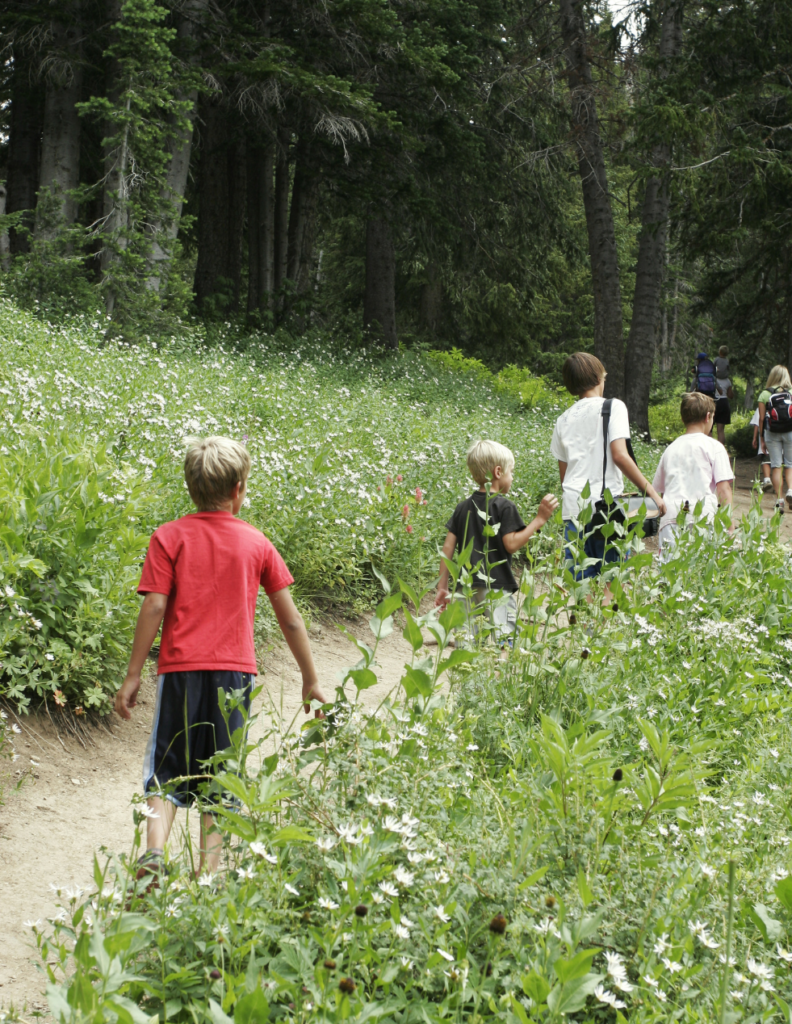
How learning outside the classroom can support better health outcomes
Built into the structure of the school day, learning outside the classroom offers a practical, equitable way to help children meet the recommended time outside — without relying on family circumstances, local green space access, or after-school routines that not every family can manage.
As Professor Dahlmann-Noor puts it, moving a lesson outdoors — a maths lesson taught by utilising areas of school grounds, for instance — does far more than meet a single learning objective. “It’s not just the topic that then is being met in terms of their learning objectives,” she says. “It’s actually their mental health is being supported, their eye health… wider health, physical… movement, activity. It ticks all of those boxes.”
Advice for schools and parents
Asked for her single biggest piece of advice, Professor Dahlmann-Noor keeps it simple: get outside and ensure children attend eye tests. “Time outside is really important for both their eye and their mental health,” she says, recommending around 90 minutes a day for younger children in particular. She also highlights a free, underused resource: NHS-funded annual eye tests for all children from around age five through to 16 (or 18, if still in full-time education), available at any high street optician.
Hear more from Professor Annegret Dahlmann-Noor at the Council for Learning Outside the Classroom’s National Conference this November, where she’ll be speaking on the evidence behind time outdoors and children’s eye health.
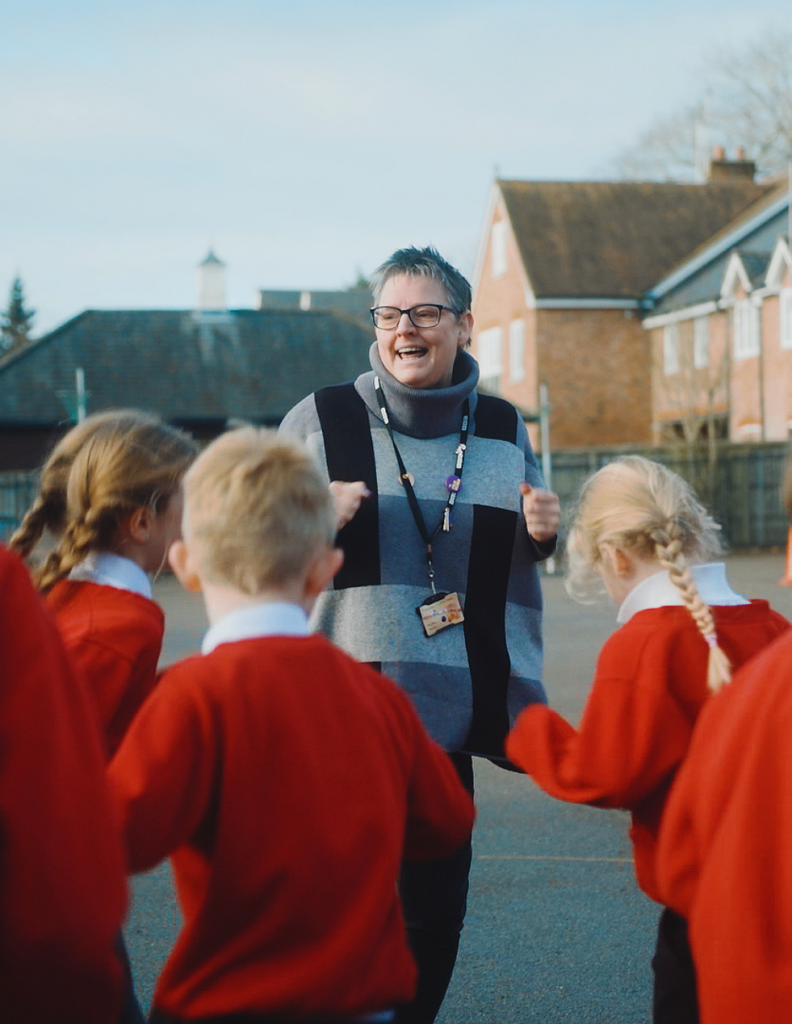
Professor Annegret Dahlmann-Noor
Professor Annegret Dahlmann-Noor is a children’s eye doctor at Moorfields Eye Hospital, the largest paediatric eye care centre in the world, and Professor of Paediatric Ophthalmology at University College London. She treats a wide range of children’s eye conditions and has been published in numerous peer-reviewed journals.
Annegret is passionate about promoting time outdoors for children to support eye health and enhance a wide range of health outcomes. She is an ambassador for the Council for Learning Outside the Classroom.