
Some of children’s most powerful learning experiences take place outside the classroom.
A museum can bring history to life. A woodland activity can build confidence and independence. A residential trip can create friendships, resilience and lasting memories. These experiences give children opportunities to explore, experiment, take risks and encounter people, places and ideas that they may never experience within the school gates or when in their home environment.
But children are also learning something else: who belongs. They notice whose needs are anticipated, whose identities are respected, whose voices are heard – and what happens (or doesn’t) when someone says or does something that leaves someone uncomfortable.
And crucially, just as they do in school, children watch how adults react.
Small moments can have a big impact
Many adults would intervene if they heard an overtly racist, homophobic, sexist or ableist comment. The less obvious moments can be harder to recognise:
- Someone laughs at a boy for choosing an activity they describe as “girly”
- A child repeatedly asks another child where they are “really from”
- A disabled child* is told they are “lucky” not to have to take part in an activity
- A child imitates another child’s accent
- Someone gets a child’s name or pronoun wrong, and everyone (except the child) seems to find it funny
- Assumptions are made about a child’s family
* I am using the term ‘disabled child’ rather than ‘child with a disability’, based on the Social Model of Disability
These moments might be dismissed as jokes, misunderstandings or harmless curiosity. Individually, they can seem insignificant. But microaggressions – subtle, often unintentional comments or actions that communicate negative or stereotypical messages – can build up over time.
They can leave someone (child or adult) feeling that their difference is open to comment or ridicule. This is why, when it comes to learning outside the classroom, understanding microaggressions matters. (I often show this video in my training, which explains microaggressions beautifully: “How microaggressions are like mosquito bites” by Fusion Comedy)
The question for adults leading and supporting an activity cannot be only: “Did they mean to be offensive?”. We also need to consider wider questions:
- What was, or might be, the impact?
- What if that happens a lot?
- What will everyone listening take away if nothing is said?
Why inclusion can look different outside the classroom
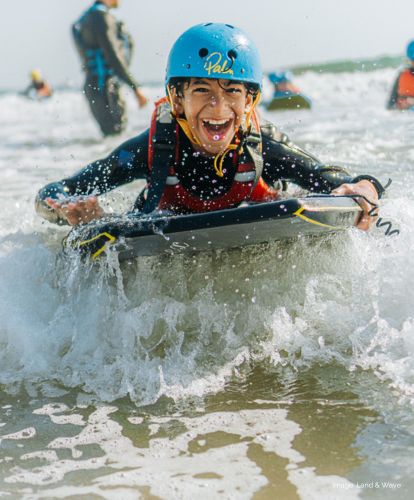
Outside the classroom, children often interact more freely and spontaneously, which is part of the value. But it can also mean that inclusion requires particular attention.
Unfamiliar adults, new groups, shared rooms, changing for activities and unfamiliar surroundings can expose differences in confidence, physical ability, language, culture or general life experience.
Activity providers are not simply responsible for facilitating the activity and keeping the young people safe. An activity may have an excellent physical safety record, but are we asking whether the social environment is safeguarding their psychological well-being?
A technically excellent activity can still become a negative learning experience if a child feels humiliated, stereotyped or excluded.
Get the environment right, though, and children who may feel unsettled, less confident or overlooked at school can have a real opportunity to flourish.
Noticing is only the first step
Recognising inappropriate behaviour and responding to it are different skills. An adult may know that a comment doesn’t feel right but still hesitate:
- Was that offensive?
- Was it offensive enough for me to intervene?
- Should I interrupt?
- What if I embarrass the child/young person?
- I don’t know enough about this issue. What if I make the situation worse?
- What do I say?
By the time they have decided, the moment has passed.
This is why inclusive practice needs to go beyond awareness – adults need the confidence and practical skills to intervene effectively.
Effective intervention isn’t about lecturing or shaming. A calm, often brief response is more effective:
- “We try not to use that word here; we generally use…”
- “I know you were trying to be funny, but I don’t think that is funny”, or for an older child: “I know you were trying to be funny, but that’s just a stereotype”
- “Jay’s pronouns are they/ them. Let’s use the pronouns they have asked us to use”
- “People’s families look lots of different ways. Let’s try not to make assumptions”
There is another important reason to intervene: The audience is often bigger than we realise.
Imagine that one child makes a homophobic joke and an adult hears it but says nothing. Another child standing nearby has two mums, but nobody knows. What did that child just learn? Perhaps that homophobic jokes are acceptable here, or that adults will not intervene or that talking about their family might not be safe.
Now imagine the adult responds calmly: “We don’t use ‘gay’ as an insult here. There’s no problem with being gay”. The adult hasn’t just addressed the child who made the comment. They have communicated something to everyone listening:
You are safe here. You belong here. I will notice, and I will act.
This can be powerful, especially for children who aren’t feeling seen, heard and included when they are in the classroom.
Where appropriate, the adult can follow up privately and turn the incident into an opportunity to learn. The aim is not to punish a child who says something difficult, but to challenge harmful language and stereotypes – and offer something better.
Inclusion needs to be designed in, not added afterwards
Good inclusive practice begins long before an incident occurs. As many organisations already know – it starts with planning. It is clear many practicalities have been considered in outside the classroom learning environments, including:
- Can disabled children participate meaningfully in every activity?
- Have sensory needs been considered?
- Could financial expectations exclude some children or families?
- Are assumptions being made when allocating groups or activities?
Some of the less common considerations include:
- Do forms and communications recognise different family structures?
- Are dietary, religious and cultural requirements treated as ordinary considerations rather than inconveniences?
- And given all that has been said above, do our staff recognise the impact of their own behaviour?
This is where organisational frameworks, such as the LOtC Quality Badge and LOtC Mark, can have particular value. Quality is not only about providing an exciting educational experience; it is about creating the conditions in which children can participate, learn and thrive. Building inclusion into expectations for planning, delivery, safety and reflective practice helps move it from something dependent on individual (or team) goodwill to something intentional and consistent.
What stays with children
Children may forget the worksheet they completed, the name of the plant or the date of a historical event. But they often remember how an experience made them feel.
They remember being left out, an adult laughing at a joke made at their expense or feeling embarrassed because nobody had considered what they might need.
But they also remember the adult who noticed: who pronounced their name correctly, adapted an activity without making them feel like a problem, challenged an inappropriate comment calmly and made it clear that everyone belonged.
Alongside everything else they learn, children are discovering the answer to a fundamental question: Who gets to belong comfortably in this world?
For every child and young person, our answer should be: You do.
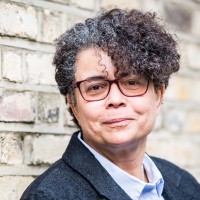
This blog post was written by:
Donna Carty, Managing Director, Resolve Evolve Limited
Donna has also created high-quality, interactive eLearning for staff and managers on Dignity at Work, Effective Challenging and the employer’s duty regarding sexual harassment.
To find out more about their training and other services please visit the website www.resolvevolve.com or contact Donna at donna@resolvevolve.com (LinkedIn: www.linkedin.com/in/donna-carty-24310638).