

The CLOtC team recently visited Oriel High School in Crawley, a Gold LOtC Mark school, to see learning outside the classroom in action and understand first-hand what it takes to earn a gold award. What we found was a school where learning beyond the classroom isn’t an add-on or a special occasion. It’s stitched into daily practice, culture and policy, timetabled across every school day to enrich the curriculum and build the confidence, resilience, and key skills students need for life and work beyond the school gates.
A morning in the garden
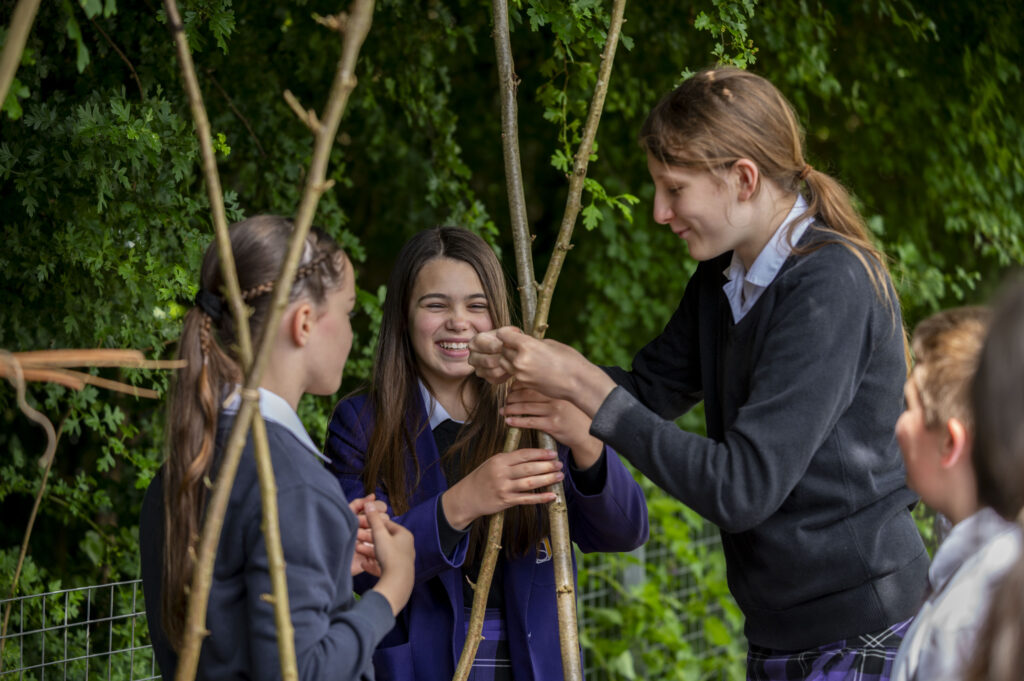
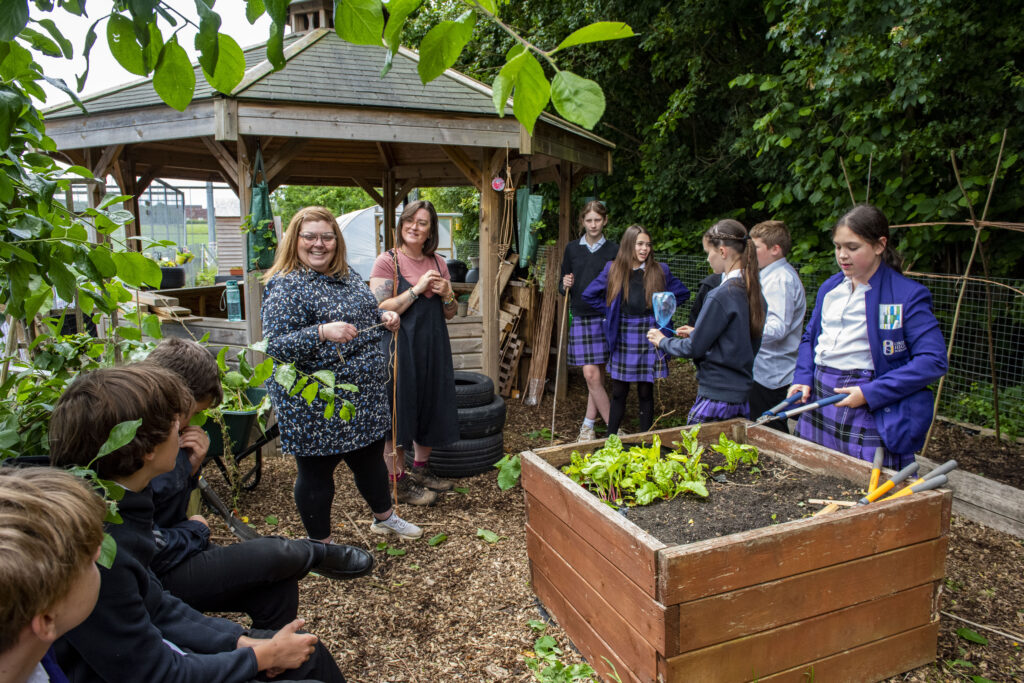
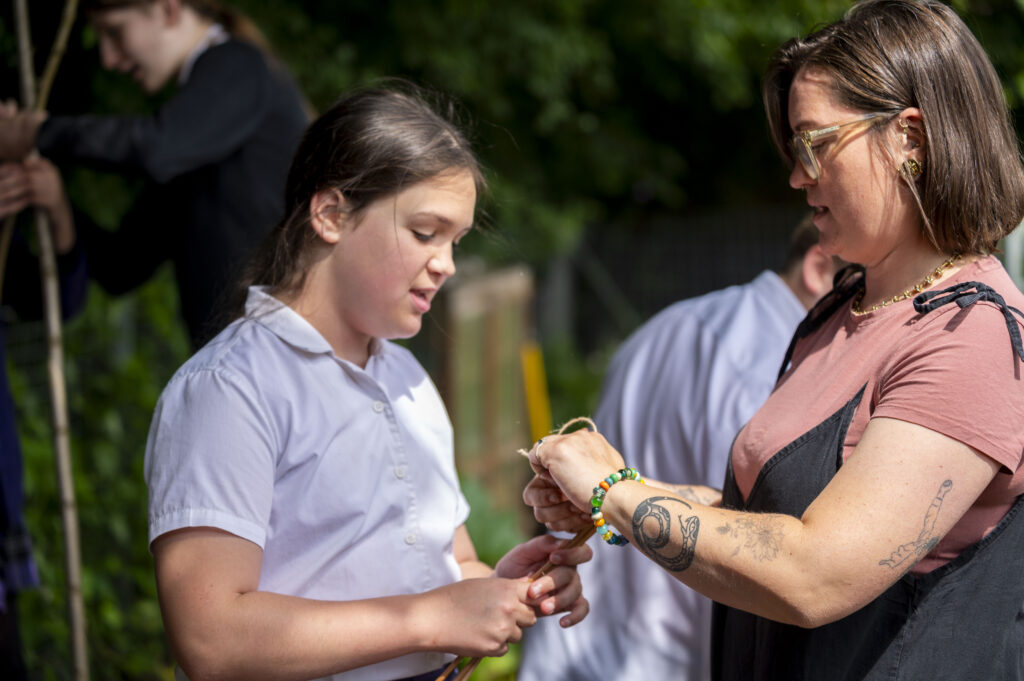
The day began in the school grounds, where pupils from mixed year groups were at work in an outdoor learning classroom — a wooden pergola, raised vegetable beds and a nearby woodland area used for den building. This space runs a weekly gardening club, a Key Stage 3 intervention for students with learning and social, emotional and mental health (SEMH) needs, working in small groups of four to eight.
The students we met — those tending the vegetable beds and a group of boys constructing a den from branches and basic materials — were focused, motivated and clearly thriving on hands-on, nature-based tasks, taking turns as leaders and building communication skills along the way.
There was a real sense of calm that comes with being outdoors, and every pupil we saw was fully engaged in the change of scene. It’s a great example of the kind of individualised, inclusive thinking behind the government’s Every Child Achieving and Thriving agenda — shaping provision around what a child needs to succeed and be happy, rather than expecting every student to fit the same mould.
Preparing Year 9 for sucess
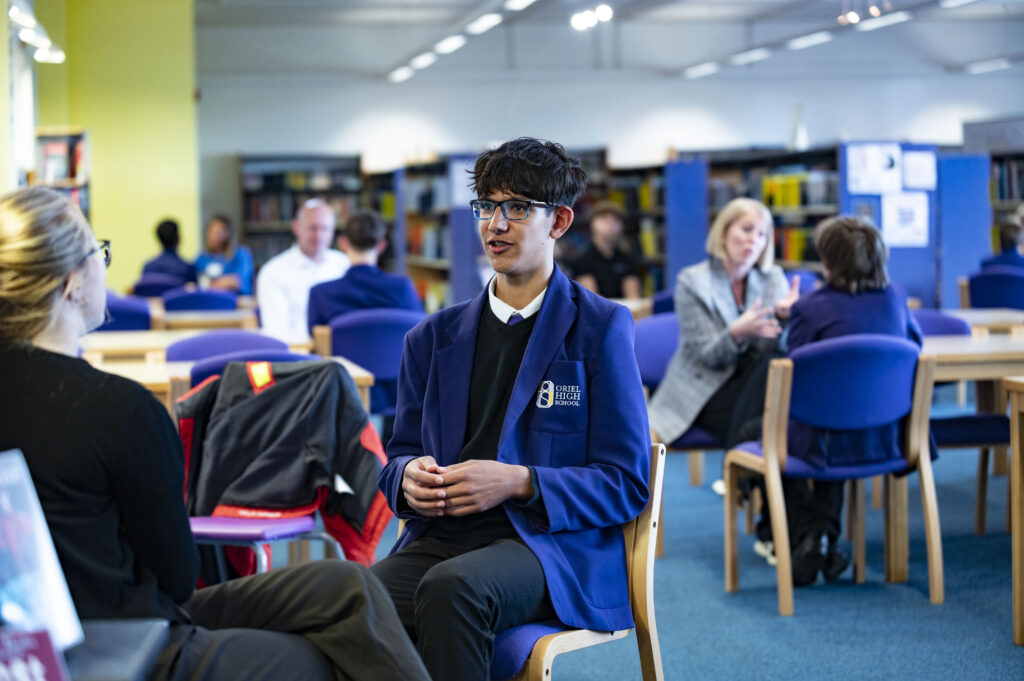
Inside, Year 9 students were on day two of a two-day, off-timetable programme called Preparing for Success — a transition activity ahead of Key Stage 4. In the morning, they took part in oracy workshops with external provider Talk the Talk, working on the professional “polish” skills that will serve them well beyond school: handshakes, appropriate dress, and presenting themselves professionally. Students practised presenting their best qualities to peers in the style of elevator pitches — an early step towards thinking about CVs and career direction.
In the afternoon, they put those skills into practice, talking to a range of professionals brought in from the local community, including NHS staff, local building firms and banks. One standout: a woman running a scaffolding company who had once been a pupil at Oriel herself and wanted to “give something back” — a great example of the alumni relationships that LOtC-rich schools can nurture over time.
Days like this model a genuine work ethic early and expose students to both academic and vocational routes side by side, so that choosing one path over the other feels like an informed decision rather than a default. That’s precisely the kind of early, real-world exposure to the world of work that Alan Milburn’s independent review, Young People and Work, argued is missing for many students — with too many young people leaving education without the confidence or practical skills employers are looking for, and NEET numbers rising as a result.
Wellbeing, regulation and rebuilding relationships
The afternoon brought a look at the mindfulness and team-building activities that run regularly through the week — Lego, sport, and woodland team building among them — offering a mix of indoor and outdoor, individual and team-based activities. What struck the team most was how engaged and positive students were throughout: it was clear that learning in different environments, away from a desk, was doing real work for wellbeing, behaviour and relationships between peers and staff.
That theme came through strongly in conversation with staff too. Ryan Sallows, School Business Manager and Educational Visits Coordinator, told us how these experiences and visits can repair relationships that have struggled in a classroom setting:
“Sometimes some of our relationships between staff and students have been difficult in a classroom environment and then those same staff have been with the same student on a visit or a day trip or a club and have rebuilt that relationship through that activity.”
We also heard about the school’s Medals Programme, run by a member of staff who leads on behaviour management. Designed to replace a more traditional internal inclusion room, the programme monitors Year 6 data and identifies a cohort of students in the first two terms of Year 7 who need extra support managing school life. Students can be referred by any teacher and are withdrawn to take part in a series of themed challenges — abseiling down the side of the school tower is one example — designed to build stamina, self-confidence and self-esteem, earning medals as they complete each stage. The programme runs through every year group and has helped re-integrate students into lessons and rebuild student-teacher relationships.
A whole school culture
What came through most clearly across the day was how deliberately LOtC has been built into Oriel’s culture at every level. Helen Everitt, Deputy Head, told us:
“Learning outside the classroom really is central to our entire curriculum intent across the whole school.” Subject leaders are actively encouraged to audit the number of trips running in their areas and think about the opportunities on offer for students “from year 7 right through to the sixth form.”
Ryan explained that this whole-school buy-in starts at the top. Staff are
“encouraged by SLT from the head teacher down through the rest of the SLT to run trips, visits, offer experiences to students outside of the national curriculum. I always say to teachers, no idea is a bad idea with regard to learning outside the classroom.”
Why it matters - and why they started
Ryan was candid about what drove Oriel to formalise its approach to LOtC in the first place. “We really realised post-COVID… what had children missed out on and that social connection and some of those fun things about school,” he said. With so much policy attention on curriculum content and exams in recent years, the school “just didn’t want to lose sight of this important area of growing up actually and of school experience.”
That’s what led Oriel to the LOtC Mark. “The LOtC Mark really provided a framework for us,” Ryan explained. Before working towards the award, the school knew it was running plenty of activity beyond the classroom, but that activity was scattered. Working towards the gold award, over roughly six months, brought it all together in one place for the first time, giving the school a structure to identify gaps, join up its efforts, and — eventually — be assessed externally against it.
The process didn’t stop once gold was achieved. “Even after being awarded gold, we still went away and thought there are still things we can do differently and better,” Ryan said. “It became a benchmark, a reference point for us now to use consistently.” That evaluative mindset paid off at Oriel’s most recent Ofsted inspection too, where the school’s strong personal development and wellbeing offer — and its Gold LOtC Mark — were specifically praised.
Ryan was equally honest about the practical barriers that put many schools off — cost chief among them, but they felt it was as important area as any of school life that needed resourcing. Just as important has been reducing the administrative burden on staff: by taking care of the bureaucratic parts of organising a trip, the school has made it easier for teachers to find the time to plan and run visits and activities. The result, he said, is that LOtC “has become a culture at the school”.
Oriel’s approach also lands at a timely moment nationally. The Department for Education’s new Enrichment Framework, published in June 2026, sets out benchmarks for schools across five areas — arts, sport, nature, civic life and life skills — and Ofsted will begin looking at enrichment as part of personal development inspections from this September. Much of what we saw at Oriel, from the gardening club to the Medals Programme to Preparing for Success, already reflects the broad, well-rounded offer the framework is asking every school to build. For Oriel, this isn’t a new demand to respond to — it’s recognition of an approach the school has already made central to its culture.

A model for what is possible
Our visit to Oriel offered a clear picture of what it looks like when learning outside the classroom is treated not as an extra, but as core to a school’s identity — shaping curriculum intent, behaviour support, careers education, staff-student relationships and school community spirit all at once. It’s a strong example of the standard the Gold LOtC Mark represents, and a reminder of just how much impact is possible when a whole school gets behind it — embedding learning outside the classroom fully, inclusively, and with the right support.
Helen Everitt and Ryan Sallows will be speaking about the inspirational learning beyond the classroom happening at their school at this year’s CLOtC Conference in November. To find out more about the event and book your tickets, visit the conference page on our website.
Find out more:
To find out more about the Learning Beyond programmes of support that we offer to schools, including the LOtC Mark, visit the Learning Beyond pages of the website.
