

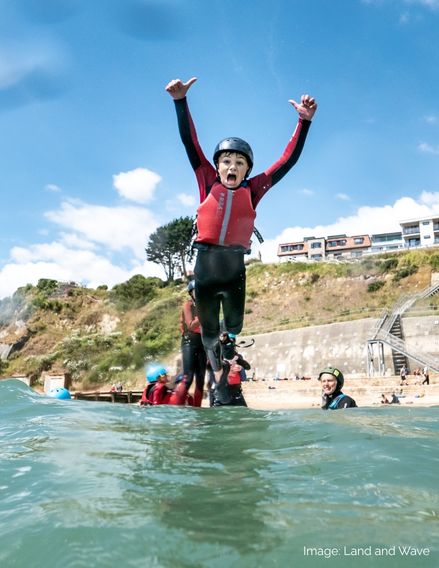
Learning outside the classroom activities, whether local, residential, urban, rural or international are some of the most memorable learning experiences schools provide. They bring the curriculum to life, develop independence, build resilience and strengthen relationships. However, these benefits are only truly realised when all pupils are able to participate. Inclusion is therefore a moral, legal, and financial responsibility for schools.
At the CLOtC National Conference 2025 in November, I had the pleasure of delivering a workshop with a range of providers, advisers and school colleagues where we discussed why and how to enable inclusive learning outside the classroom activities.
A summary follows.
The moral case for inclusion
At its heart, inclusion is about fairness and opportunity. Educational visits often provide experiences that cannot be replicated in the classroom: visiting engaging attractions, experiencing different environments, developing teamwork during residential activities, immersion in other cultures and countries.
If certain pupils are excluded, particularly those with disabilities, special educational needs (SEND), medical conditions, or financial constraints, they miss out on opportunities that support both academic learning and personal development. Often these pupils are the ones that need these opportunities the most, due to the inequalities of life chances they face.
Inclusive educational visits reinforce the values that schools aim to promote: respect, equality, opportunity and belonging. When activities are designed so that everyone can take part, they help all pupils understand diversity and empathy in real-world contexts. Pupils learn that differences are normal and that barriers can be overcome through thoughtful planning and cooperation.
In addition, inclusion builds confidence and independence in pupils who may otherwise feel marginalised. For example, a well-planned visit with appropriate support can enable a pupil with mobility needs to access environments they may never have experienced before. These successes can have lasting impacts on self-esteem and aspirations.
Legal responsibilities
Schools in England have clear legal duties to ensure inclusion on educational visits, particularly under the Equality Act 2010. This legislation protects individuals from discrimination based on protected characteristics:
- age
- disability
- gender reassignment
- marriage and civil partnership
- pregnancy and maternity
- race
- religion or belief
- sex
- sexual orientation
Whilst behaviour itself is not a protected characteristic, schools should consider whether the behaviour is as a result of a pupils protected characteristic.
Within the context of learning outside the classroom activities, the Equality Act 2010 requires schools to make reasonable adjustments so that those with protected characteristics are not placed at a substantial disadvantage compared with their peers. This means schools must consider accessibility, support needs, and alternative arrangements where necessary. Simply excluding a pupil because planning adjustments would be inconvenient is unlikely to be legally defensible.
In relation to the above, caution should be exercised over reliance on parents to enable inclusion of the pupil in case they are not willing, are subsequently ill, work commitments change etc. It is prudent to plan a backstop position for inclusion that doesn’t require parents attending. The responsibility is on the school to offer an inclusive opportunity, not parents/carers.
The Department for Education provides guidance on Supporting pupils at school with medical conditions stating “Pupils at school with medical conditions should be properly supported so that they have full access to education, including school trips and physical education”. The Department’s Health and safety on educational visits guidance, emphasises “plans should be proportionate and sensible, focusing on how to manage genuine risks”
Government and sector national guidance encourages schools to avoid unnecessary bureaucracy while still ensuring appropriate planning, inclusion, supervision and risk management. The key point is that risk should be managed and cannot be completely avoided in most cases. Inclusive practice aligns with the expectation that educational opportunities should be available to all pupils wherever reasonably possible.
The financial cost
The financial cost of a school failing to be inclusive can include compensation, legal defence costs, regulatory compliance expenses, staff investigative and complaint resolution time, poor stakeholder relations, funding risks, and reputational harm. Preventative steps to ensure compliance can help avoid the higher costs of dealing with discrimination claims and enforcement actions.
Risk assessment as an enabler
A thorough risk assessment is central to inclusive educational visits. Rather than focusing solely on potential hazards as a barrier, effective risk assessment asks: “How can we make this activity accessible and safe for everyone?”
When planning learning outside the classroom activities, those responsible should consider factors such as those within the STAGED approach to educational visits. STAGED stands for Staffing – Travel – Activities – Group – Environment – Distance.
Some examples of considerations are:
- Staffing competence and levels
- Accessibility of travel methods
- Accessibility of activities
- Medical needs, behaviour and medication management
- Accessibility of venues and accommodation
- Financial barriers for families
- Cultural or religious considerations
- Emergency evacuation
- Distance from additional support
By collaborating (with parents, pupils, the visit team, EVC, SLT, SENCO, DSL providers, medical practitioners etc.) and identifying these factors early in the planning process, schools can implement practical solutions such as adapting activities, arranging accessible accommodation, or providing additional supervision.

Importantly, risk assessments should be proportionate and dynamic. They should reflect the specific group of pupils attending rather than relying on generic documents. For example, if a pupil uses a wheelchair, the Visit Leader may need to check venue accessibility or undertake a Personal Emergency Evacuation Plan (PEEP), for example.
Inclusion-focused risk assessment encourages creativity rather than restriction. It ensures that decisions are informed and that staff feel confident managing challenges without excluding pupils unnecessarily.
A culture of inclusion
Ultimately, inclusive educational visits are about culture as much as compliance. When schools view inclusion as a fundamental principle, planning naturally centres on how every pupil can take part.
Educational visits should reflect the broader ethos of the school: that every child deserves access to enriching experiences that support learning, confidence, opportunity and wellbeing.
When inclusion is prioritised:
- Pupils gain valuable experiences and life skills
- Staff develop stronger planning and risk management practices
- Schools meet their legal obligations
- Communities see education as equitable and supportive
Educational visits have enormous educational and personal value. Ensuring that these experiences are inclusive is both the right thing to do and a legal responsibility. Through thoughtful, collaborative risk assessment, adherence to the law and following sector guidance, schools can design visits that are safe, accessible, and enriching for all pupils.
Inclusion is not about eliminating risk or complexity. It is about removing unnecessary barriers so that every pupil can participate, learn, and thrive beyond the classroom.
This blog post was written by:
Andy Smith, Director of Operations & Advice, EVOLVE Advice

About EVOLVE Advice
EVOLVE Advice provides educational visits advice and guidance to around 4,500 schools and educational settings in the UK and overseas. Their experienced advisers also train teachers and school staff to help them deliver safe and memorable educational visits, supporting trips for almost 6 million children and young people in 2025.