

I would guarantee that a vast majority of your favourite childhood memories happened outside. Climbing something you probably shouldn’t have. Building dens. Getting muddy. Falling over. Watching something crawl, fly, ripple or grow. The best moments were rarely on a screen – they were in spaces that were green or blue.
We, as human beings, are naturally connected to the world around us. Since the first appearance of Homo sapiens we have evolved to live and thrive in landscapes dominated by vegetation, water, open skies and shifting light. Our nervous systems, our eyesight, even our hormones developed in response to those environments. And whether we realise it or not, we still crave them.
We are designed to see patterns. Have you ever noticed how the recursive, fractal patterns in nerve systems, tree roots, rivers, lightning bolts and leaf veins all resemble one another? That is not an accident. That is nature displaying extraordinary efficiency.
A fractal is a pattern that repeats itself at different scales – the same structure appearing again and again, smaller and smaller. Look at a tree branch. It splits into smaller branches, which split into even smaller branches. The same logic governs blood vessels in your body, the way rivers divide across a landscape, and the way lightning forks through the sky. These patterns allow energy, water and nutrients to move efficiently. They are mathematical solutions to biological problems.
And we are part of that pattern.
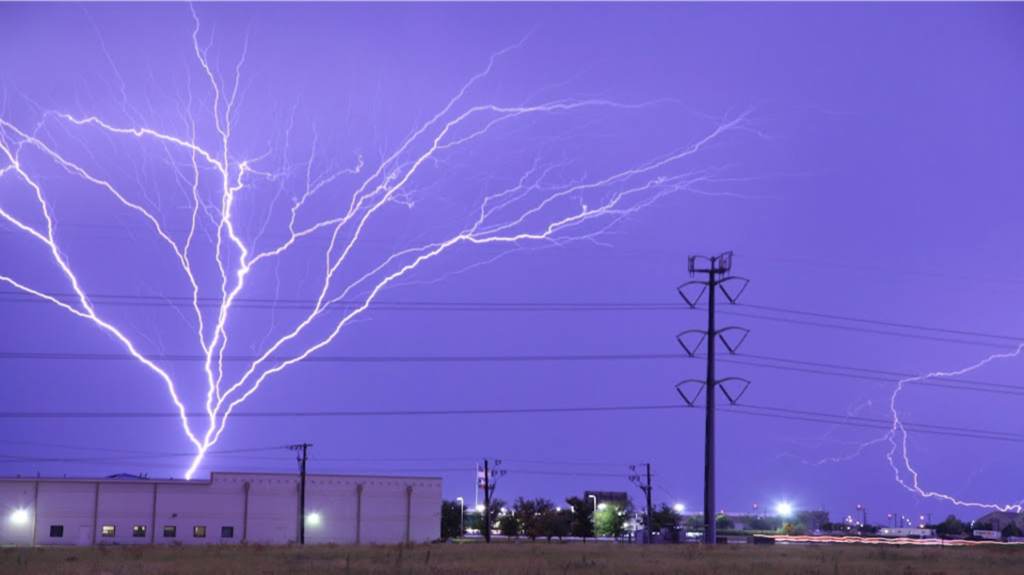
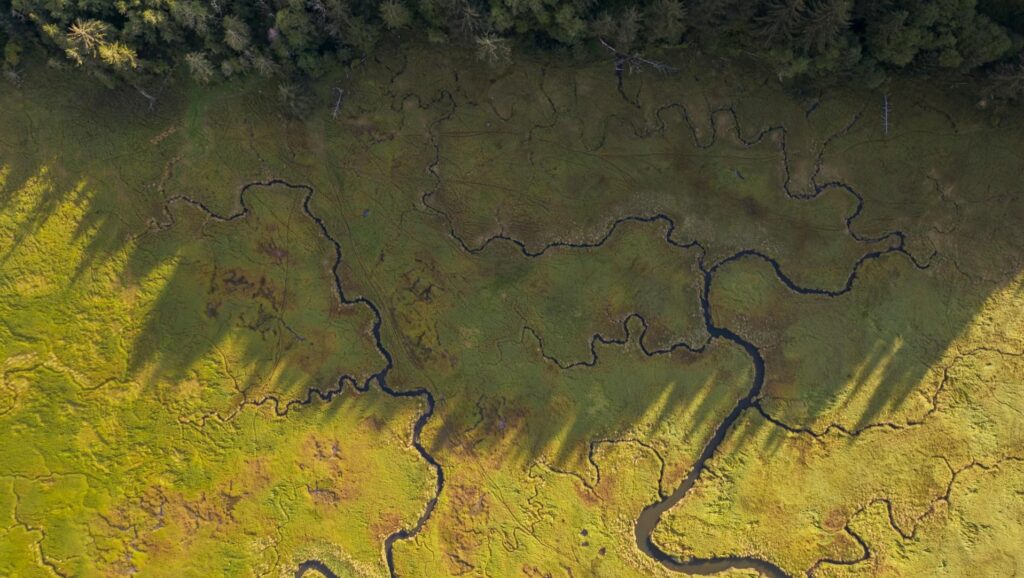
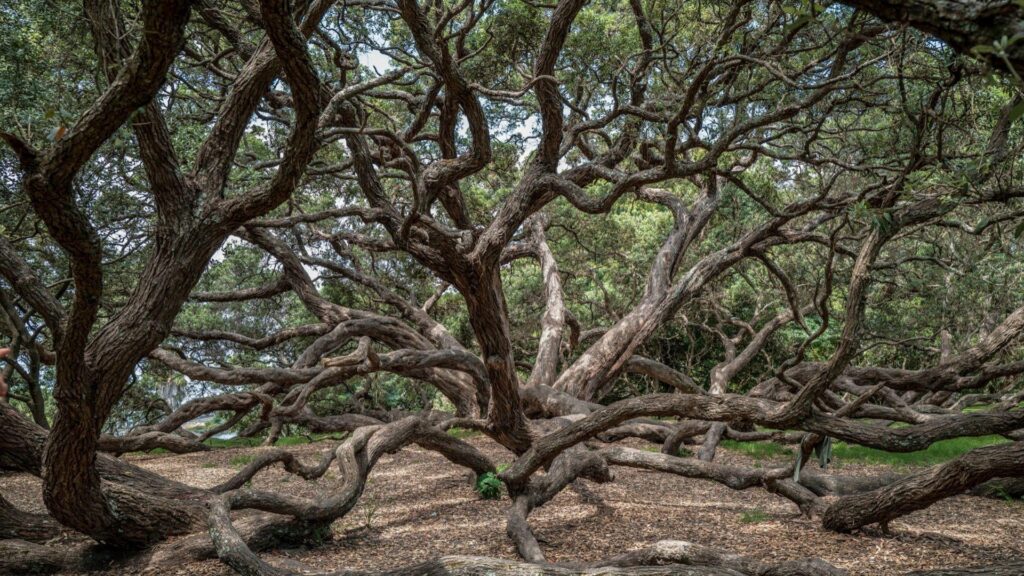
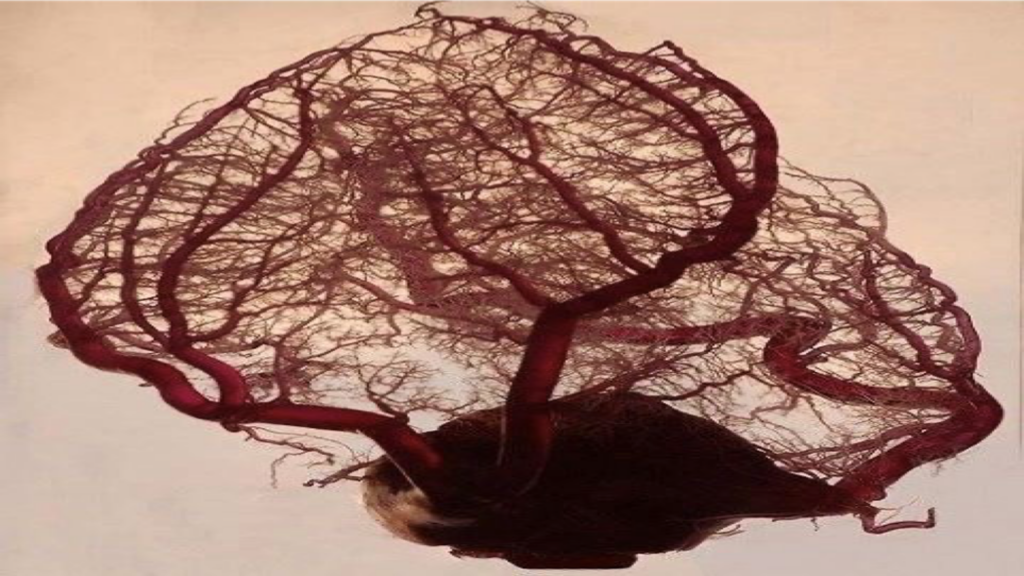
The universe itself – the “cosmos” – literally means order. Structure. Pattern. We are not separate observers of this order. We are expressions of it.
Humans love fractal patterns because we are wired to recognise them. Research shows that exposure to natural fractal patterns can reduce stress and calm the nervous system. We do not just see these patterns – we feel them.
We love them so much that we recreate them in art, architecture, music and design. As philosopher and mathematician Gottfried Wilhelm Leibniz said, “Music is the pleasure the human mind experiences from counting without being aware that it is counting.” Music, like nature, is patterned.
But our connection to nature is not just mathematical – it is biological and psychological. Biophilia is the term used to describe the genetically determined affinity humans have with the natural world. Quite literally, it means “love of life.” It suggests that our attraction to nature is not cultural fashion – it is evolutionary inheritance. This word is so powerful, so much so that there are nearly 8 billion definitions for it.
Consider petrichor – that unmistakable scent when rain hits dry ground. Or apricity – the warmth of winter sunlight on your skin. Why do those sensations feel so good? Because for thousands of generations, ‘smelling rain’ was a heads up to seek shelter but it also meant growth and survival. Sunlight meant warmth, safety and nourishment. Our bodies still respond accordingly.
Even colour plays a role. Humans can distinguish more shades of green than almost any other colour. Our visual system evolved in vegetation-rich landscapes. Green meant food. Blue meant water and clear skies. These colours signal stability and safety, which is why environments dominated by greens and blues tend to lower heart rate and reduce stress.
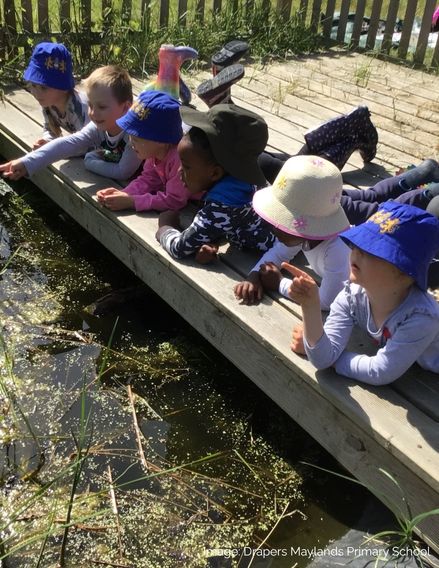
And yet, in the last few decades, we have increasingly swapped dirt for digital applause.
There is nothing inherently wrong with technology. It connects us, informs us and expands possibilities. But when the gap between expectation and reality widens – when curated digital lives diverge from lived experience – a chasm of uncertainty can form. Anxiety and depression often thrive in that space.
Nature, by contrast, is honest. It is patterned. It is ordered. It does not pretend.
When we ask students why they enjoy being outside, most struggle to articulate it. “I just do,” they say. “There’s something about it.” That “something” is not mystical – it is neurological. Time in natural environments has been shown to improve attention, reduce stress hormones and enhance cognitive function. Studies comparing classroom-based learning to outdoor, physical learning consistently show improved retention and performance when students engage. After our continued work in this field it felt only right to become a member of the LOtC Quality Badge assurance community.
On one of our projects, a student told us she had never seen the ocean before. “I didn’t realise it had a smell,” she said. She later graduated from university with a degree in marine biology. That first sensory encounter mattered.
But how does that love of nature get passed on? Through parenting. Through families. Through teachers.
A teacher placing a simple plant in a classroom is not “just decorating.” It is introducing life, growth, pattern and responsibility into a space. What’s in a plant? The Fibonacci sequence: 1, 1, 2, 3, 5, 8, 13, 21, 34, 55. Spirals and proportions found throughout leaves, petals and seed heads. Even the DNA double helix carries proportional relationships that echo the golden ratio. Mathematics is not confined to textbooks. It is embedded in every living system.
When students recognise patterns in a leaf or symmetry in a shell, something shifts. Maths becomes visible. Science becomes tangible. Wonder becomes possible.
And wonder is powerful.
In an age of instant answers, we risk losing what physicist Brian Cox describes as the “art of wonder.” When every question can be resolved by a quick search, curiosity can shrink. Attention fragments.
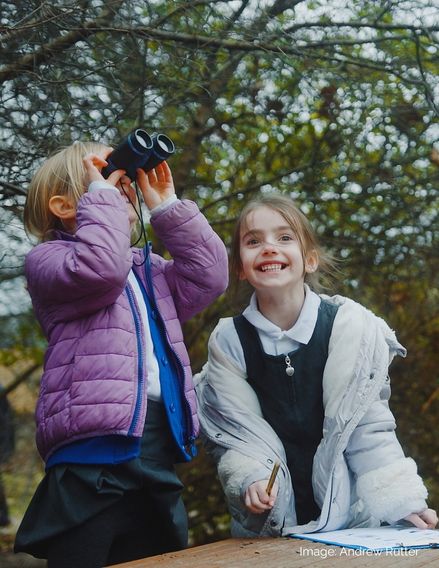
On Flooglebinder trips, we deliberately limit phone use. Instead of immediate answers, students use identification cards or ask guides to help determine what species they are seeing. Instead of “that’s a sparrow,” we encourage, “that’s a house sparrow.” That extra step deepens attention. It strengthens connection.
We also encourage better questions. Rather than asking, “What do you want to be when you grow up?” we ask, “What problem would you like to solve?” The latter invites intrinsic motivation, empathy and purpose. It connects career to contribution.
David Orr’s “3 H’s” framework captures this beautifully: Head, Heart and Hands. Reflection. Relationship. Engagement. True education happens when students think critically, feel deeply and act physically. When they get their hands dirty. Whether observing a bullfinch in the UK, spotting a red admiral butterfly, identifying an oak tree, or encountering a lapwing or honey badger in South Africa, the principle remains the same: experience first, abstraction later.
At Flooglebinder, our pre- and post-trip surveys are beginning to show measurable shifts in students’ sense of nature connectedness. While long-term longitudinal data in this field remains limited, early indications suggest that immersive, outdoor experiences can increase wellbeing, resilience and environmental stewardship. Even short exposures appear to have lasting influence.
Ultimately, we hope to see greater recognition – even at governmental level – that residential outdoor experiences are not luxuries. They are developmental necessities. Too many teenagers have never seen the ocean. Too many children’s memories are pixelated rather than muddy.
We are the only species that routinely denies itself sleep and overextends its natural limits. We have become disconnected, but it is not final. The connection to nature is innate. It may be distorted by modern habits, but it is not erased.
Whales migrate across entire oceans guided by magnetic fields. Spiders spin geometric webs without being taught. Trees communicate through underground fungal networks. And we – despite our complexity – are still biological organisms shaped by the same planetary forces.
If you think back to your own childhood – the climbing, the running, the lying on your back watching clouds – you will likely find that your strongest memories were formed outside. The question is: will today’s children be able to say the same?
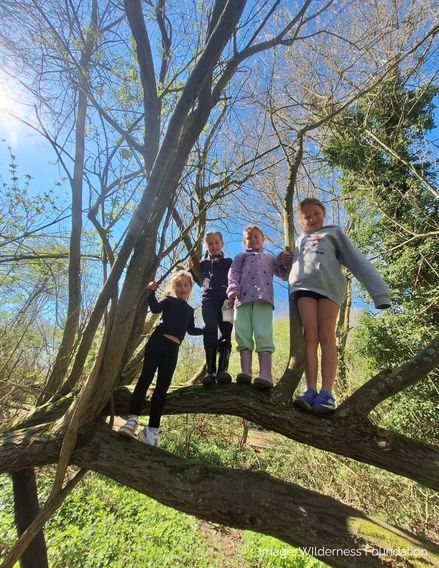
Reconnecting does not require grand gestures. It might begin with a walk. A plant. A question. A pause long enough to notice the pattern in a leaf or the scent of rain on the pavement. We are closer to nature than we think, and perhaps the greatest lesson we can pass to the next generation is not what to memorise – but how to notice.
When we reconnect with nature, we do not escape the world, we remember that we are part of it.
This blog post was written by:
Ian Taylor, Director and Head of Conservation, Flooglebinder
Ian is a lecturer, marine biologist, field guide, and terrestrial conservationist with a lifelong passion for wildlife tracking. At heart, he is an educator who believes the best learning happens in the field.
While lecturing from 2009 to 2012, he recognised that many students weren’t gaining meaningful, in-situ conservation experiences. Believing education could be more immersive and impactful, he founded Flooglebinder in 2012 to bridge the gap between theory and real-world practice.
Today, Flooglebinder is the first and highest-scoring B Corp in the academic/ travel space and a pioneer in integrating curricula into hands-on field settings.
It’s not just about being in nature — it’s about understanding your purpose within it.